
Most new cars sold in the U.S. come equipped with all-season tires – a standard choice that aims to balance comfort, durability and fuel efficiency for everyday driving. But for Colorado’s winter conditions, especially along the I-70 Mountain Corridor, all-season tires aren’t the same as tires designed for cold weather and snow. That difference matters both for safety and complying with Colorado’s Passenger Vehicle Traction and Chain Law.
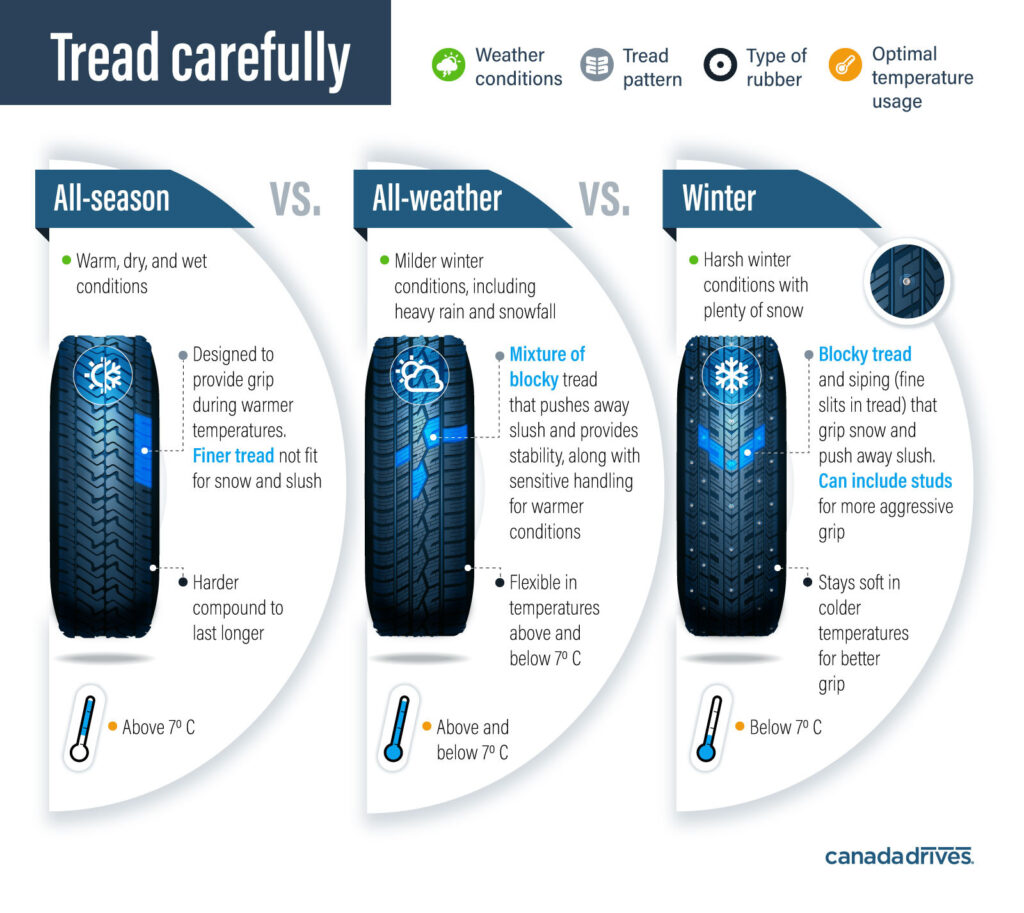
All-Season vs. All-Weather vs. Winter Tires
- All-Season Tires are what most new cars – whether gas-powered or electric – have installed initially. They’re suitable for mild rain and dry pavement but lose traction in cold temperatures below about 45°F and on snow or ice.
- All-Weather Tires are a step up in winter performance. They are designed to stay flexible in cold temperatures, and many carry the Three-Peak Mountain Snowflake (3PMSF) symbol, indicating they meet more rigorous winter traction standards.
- Winter or Snow Tires are engineered specifically for snow, ice, and cold – offering the best traction and control in winter conditions. These often carry the 3PMSF symbol as well and sometimes an Ice Grip symbol.
Electric Vehicles Are Different – and Harder on Tires
Electric vehicles (EVs) are gaining popularity – and many drivers bring them into Colorado’s winter roads. But EVs have unique characteristics that affect tire wear and performance.
- Heavier Weight: EVs carry large battery packs that make them significantly heavier than comparable gasoline vehicles. This extra mass puts more load on tires, increasing wear. (Michelin)
- Instant Torque: Electric motors deliver maximum torque instantly, which can lead to more rapid tire abrasion, especially during quick acceleration or traction-challenged situations. (Pep Boys)
- Faster Tire Wear: Multiple studies and industry reports have found that EV tires can wear up to 20% faster than those on internal combustion engine vehicles – due to the combination of weight, torque and tire design needs. (tiretechnology.mydigitalpublication.com)
The result? EV drivers need to check tire tread and condition more frequently – especially as winter approaches – and be proactive about choosing tires suited to cold weather and snowy conditions, and to ensure that they are following Colorado’s Passenger Vehicle Traction and Chain Law.